Gloeocapsa spp.
A cyanobacterium
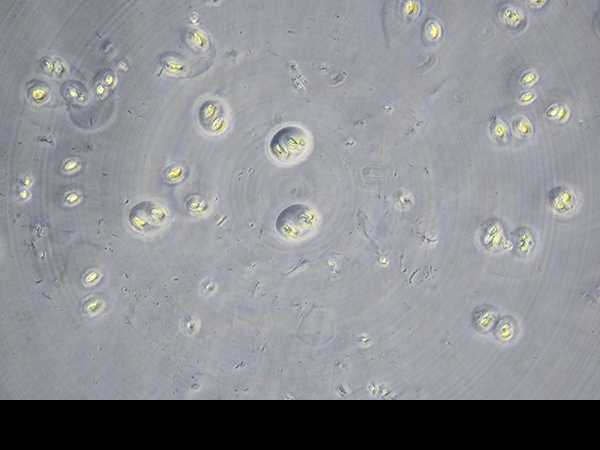
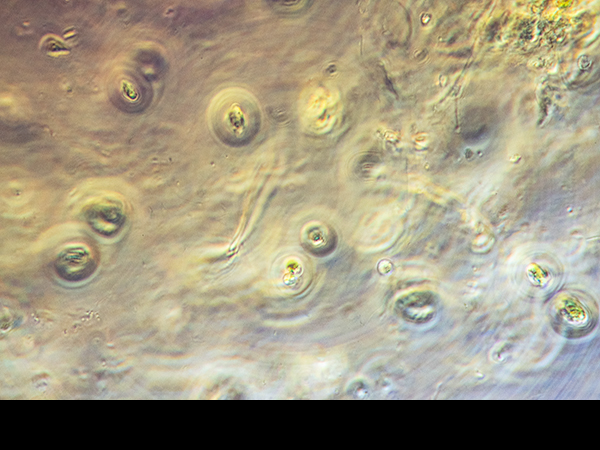
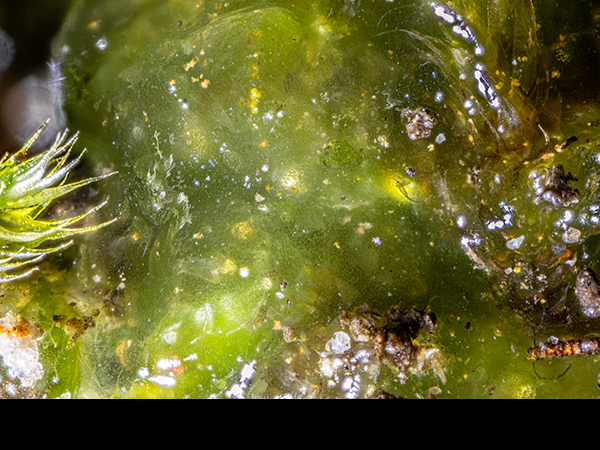
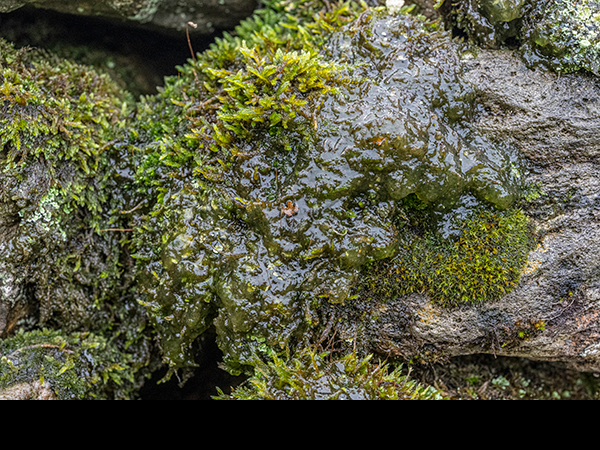
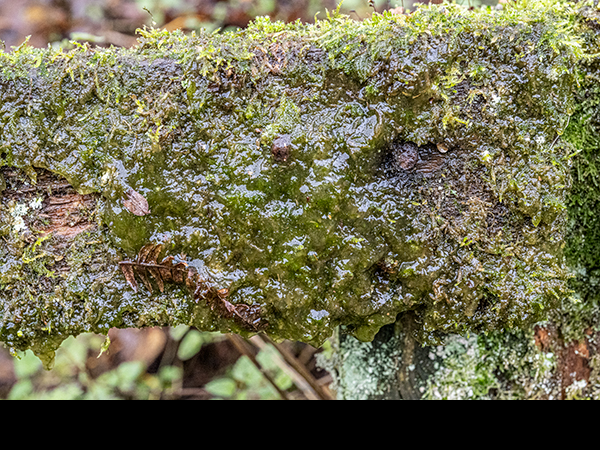
Gloeocapsa spp., a cyanobacterium. Seen during cool wet weather as a clear gel covering mosses on north facing stone and timber. Requires microscopic examination to reveal dividing cells as islands surrounded by a gel. Cells are green owing to the prescence of photosynthetic structures called chloroplasts.
Photograph detail
Slide 1: Gloeocapsa spp, a cyanobacterium. Collected from a north facing disused railway timber fence. Hargill, Redmire. Photographed at x400, phase contrast illumination. November.
Slide 2: Gloeocapsa spp, a cyanobacterium. Collected from a north facing disused railway timber fence. Hargill, Redmire. Photographed at x1000, oil immersion and phase contrast illumination. November.
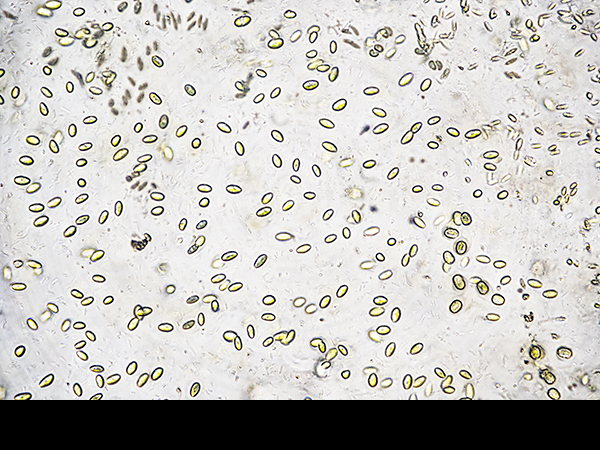
Slide 3: Gloeocapsa spp, a cyanobacterium. Collected from a north facing sandstone wall. Hargill, Redmire. Photographed at x400, brightfield illumination. November.
Slide 4: Gloeocapsa spp, a cyanobacterium. Gel collected from a north facing sandstone wall. Covering the moss, Hypnum cupressiforme. Hargill, Redmire. November.
Slide 5: Gloeocapsa spp, a cyanobacterium. Gel covering a north facing sandstone wall and the moss, Hypnum cupressiforme. Hargill, Redmire. November.
Slide 6: Gloeocapsa spp, a cyanobacterium. Gel covering a north facing disused railway timber fence, and the moss, Hypnum cupressiforme. Hargill, Redmire. November.