Apis mellifera
Honey Bee
Apis mellifera, Honey Bee, is a highly advanced social bee living in large colonies consisting, usually, of a single reproductive female, the queen, and several thousand non-reproductive females, the workers. these are present throughout the year with worker numbers peaking in early summer. Males, the drones, are fewer in number and are not present during the winter or early spring. Honey is produced primarily from nectar, with some pollen and enzymes from the worker bees. Honey is about 80% sugar and varies according to the flowers visited by the workers.
Photograph detail
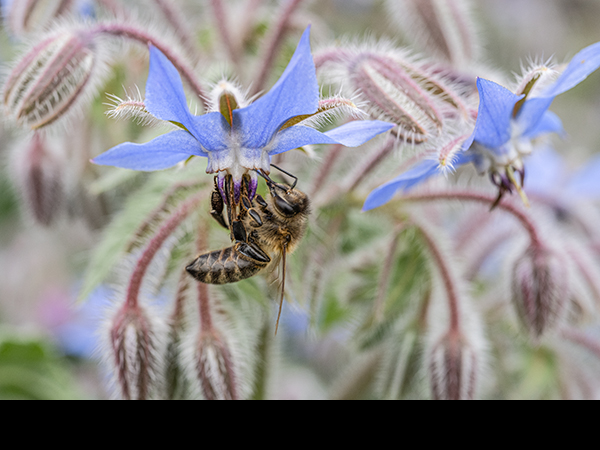
Slide 1: Apis mellifera, female worker foraging on Borage, Borago officinalis. Garden in Redmire. September.
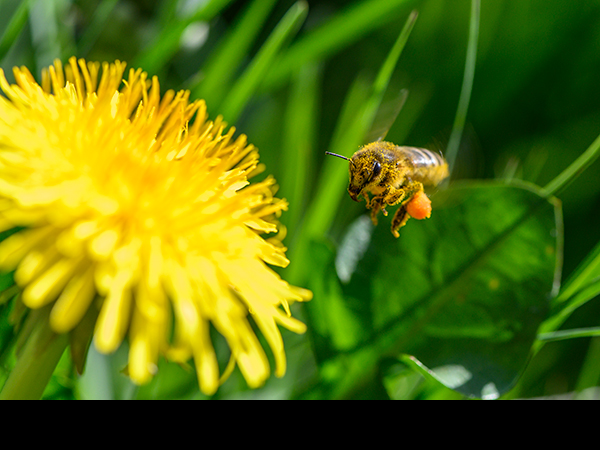
Slide 2: Apis mellifera, female worker leaving Dandelion, Taraxacum officinale, loaded with pollen. Field in Redmire. April.
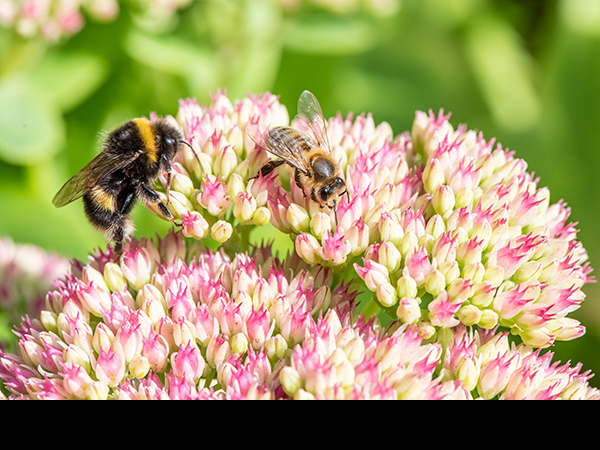
Slide 3: Comparison of female workers of Apis mellifera, and Bombus terrestris, a Bumblebee, on Sedum spectabile. Garden in Redmire. September.
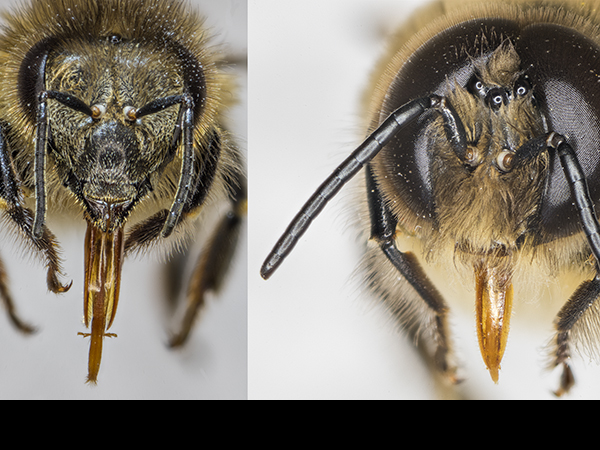
Slide 4: Face views of Apis mellifera. Left - female worker. Right - male drone.
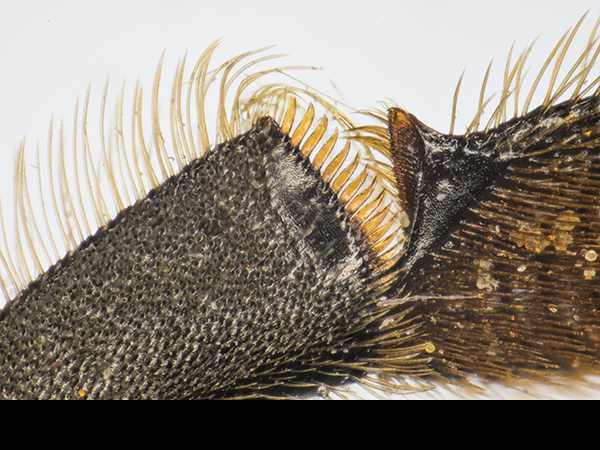
Slide 5: Pollen press on hind leg of Apis mellifera worker. Pollen is compressed in preparation for transporting as a load on the pollen basket.
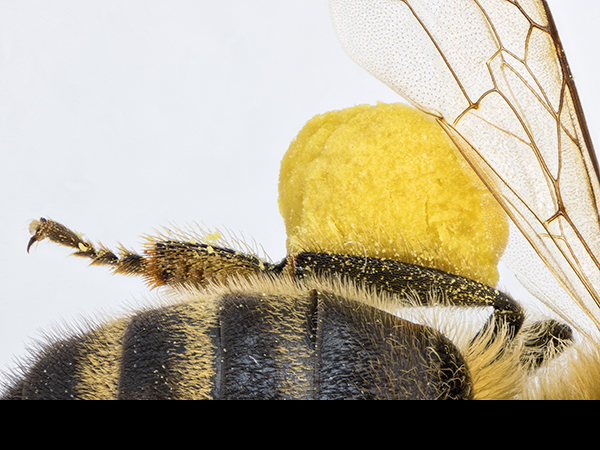
Slide 6: Pollen load on hind leg of Apis mellifera worker. The pollen carrying structure is called a pollen basket.
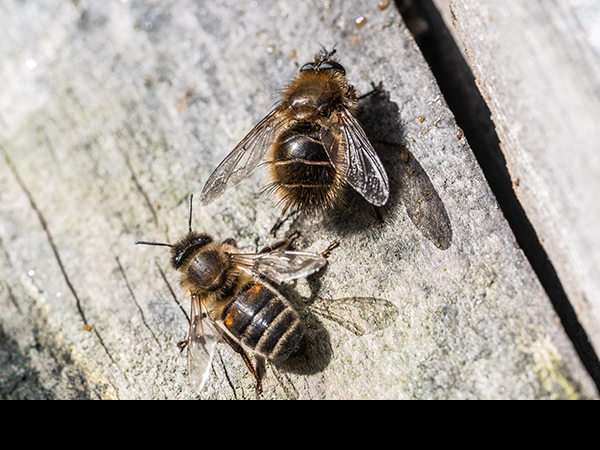
Slide 7: Apis mellifera worker, bottom, with a bee mimic, Hoverfly Merodon equestris. Entrance to bee hive, West Wood, Redmire. March